So, for the first time in like 7 years, I thought about this bingo game I had put together years ago. I searched the recesses of my hard drive to come across it thinking it would be great for STAAR Camp. STAAR is our state standardized test. As I reviewed it to share with the team, I was thinking.... 'why haven't i used this in forever?!!?! What a great review and spiraling activity!!!!' I think, too often, I get excited about something new and forget there are incredible things already here for my students. I'm also easily excitable about new activities that I often get carried away! Sometime, over 10 years ago, I came across this incredible Bingo template created by Steve Mashburn in 2001. It is Ah-maz-ing!! It creates 25 unique Bingo Cards.
Here is a selection of the cards. His mastery at work! I admire people so much that can use Excel to this masterful degree.
Here is his original template. I've looked extensively for where his original is posted and cannot find it. There are, however, about a billion teachers who have used, referenced, and published it. There are quite a few who have provided versions of it for you to use so try googling! One great site that made several versions you can download for free is I Want to Teach Forever. You can access their materials here. So, all those years ago, I created one for Equations (mostly linear). The essence of my teaching high school math is my students knowing and using y=mx+b. Surprisingly, there can never be too much practicing, too much reviewing, or too much mastery in this skill. So that is how I came up with whY Bingo. It's all about that y. I used questions that we saw repeatedly on testing and highly missed ones. This was before our testing and TEKS change so some questions have moved down to intermediate school but are still relevant and necessary fundamentals. **If you are a intermediate school teacher, be sure and check vocabulary as I know slope and y-intercept are not used in your instruction.** Below is a close up view of a couple of my student bingo cards:
I used a Power Point as my 'calling cards' instead of strips as these are items that needed to be seen by the students and not just heard. And some were super long! These were very basic and just on white slides. These were my early days of Power Pointing so please forgive. Here are some selected power point slides:
You may download the Power Point here. I also saved it in PDF here.
The power point says they may fill in a blank Bingo but I've learned this can take an extensive amount of time and that is why I love the template that pre-prints them all mixed up for them.
Of course, me being me, I did a 30 question Power Point for a 25 question template so I actually have 2 sets of bingo cards getting the extra 5 questions on the spaces. You can download them in Excel or PDF here. I have a laminated set of both and just mix them up. you could also print so the students could work or take notes (and you won't have pinto beans all over your floor ;-))
I think this is excellent review, especially for STAAR or end of the year standardized tests! Plus they get to play a game. And why haven't I used it in fever?!?!!? Ugh!!! Already done and ready, so that would have saved me time and as a teacher, we have so much extra time we just need more things to fill that empty void.
Hope you enjoy and please feel free to share or let me know if you see any needed corrections!
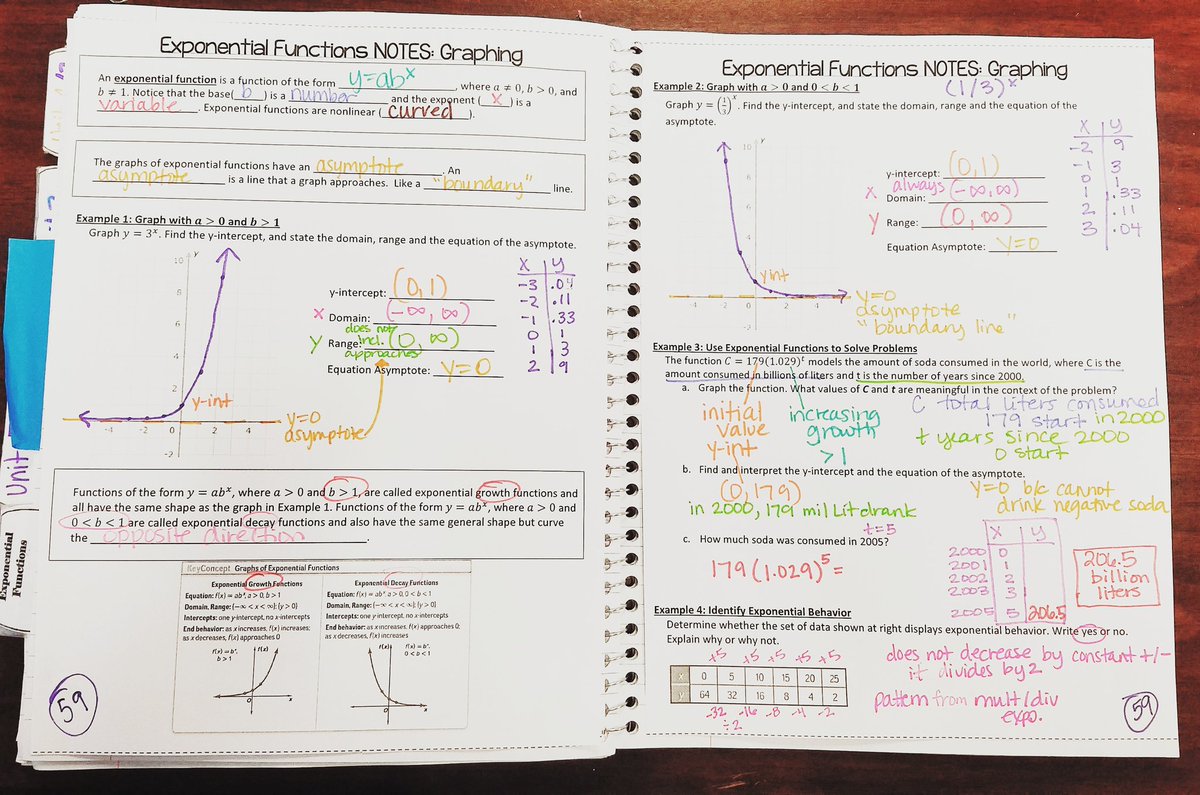
And today.... we graphed! Below are the fabulous notes I received from my colleague, Mrs. Villarreal.
I, of course, had to 'font' them up and fit them to my students needs with fill-in-the-blank and interactive notebook grid lines.
These are the finished ones. I must place a disclaimer here: this is only the third time I have taught these. In order to even learn them (as I had not done them in 20 years) I used these incredible resources I found on the internet by following along on this link. Pretty sure I could not have done it as proficiently (or even 'ficiently') without these resources! I wrote more about it on my earlier blog post here.
Download all the notes in both Word and PDF here for FREE!
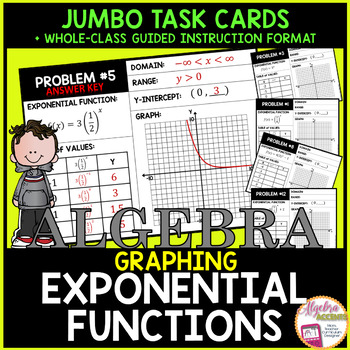
I followed this up with another activity from Algebra Accents available on Teachers Pay Teachers:
$3 and it saved me about 4 hours of planning and manipulating! Completely worth it! The graphs were beautiful. I know that a lot of blogs share free resources and that is generally what I do with mine. I usually create activities that save me that $2 or $3 only to realize it takes hours sometimes away from my family. This unit, I've used a lot of paid resources and as a result, I've been able to spend extra time at home and planning for my class. Money well spent in my opinion. Only took me 17 years of teaching to figure this out! And this blog has helped me to appreciate the time that goes into creating activities like these! Another fabulous option that I completely forgot about until this writing was this one:
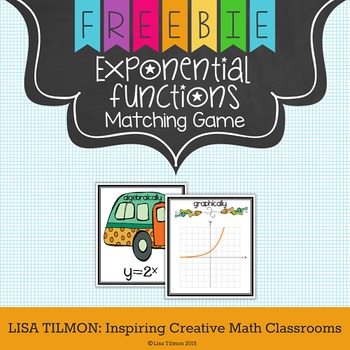
And the icing on the cake? It's FREE on Teachers Pay Teachers. Simply click the picture above to be taken to this incredible FREE resources from Lisa Tilmon!!!
In years prior, we used this note sheet for our 3rd day of Exponential Functions. This was after graphing and regression lessons and assignments from this link.
Download these in both Word and PDF here for FREE!
As always, please let me know if you have anything to add or see any needed corrections!
Today we started exponential functions and I thought I'd share my notes, activity and next day warm-up with you. I would like to preface this post with today is the Monday after Spring Break, most students (and teachers :-) ) seemed to have forgotten the basics. Student: How do I know if it is growth or decay? Me: What does the problem say? Student: Well it's increasing... Me: Both inwardly and verbally... **Sigh** This is how my whole day went but luckily the material was pretty easy for them to grasp. My colleague, Mrs. Villarreal prepared some notes that were fabulous for Growth and Decay and shared them with me. I, of course, had to 'FONT' them up and added a few fill in the blanks for guided notes. I also have this really strange 'absolutely cannot stand comic sans font' affliction. I don't know why I have it but it is a very real thing that generally means I have to change every resource ever done to a different font! Her original notes are available in Word and PDF for FREE. Thank you so much for sharing Mrs. V!! My revised notes below are available in both Word and PDF. The font I used in Word is KG Payphone which you can download from Dafont.com here for FREE! I also changed the interest formula to the continual interest formula per some earlier discussion with colleagues. I wrote more about it here which also has notes and an activity.
Here is the key as well:
The notes went exceptionally well but my students have seen this before. I taught exponential functions quite different when I taught Algebra and they have only been in our Algebra 1 Curriculum for 3 years now. The first year was one of those 'learned them while the kids did' years! Luckily I found a great resource online from a teacher who shared and it made all the difference. I followed this link and found a wealth of knowledge. I'll post all the ones we've used in a later post. It is one of those I researched the sharer and personally e-mailed to thank them.
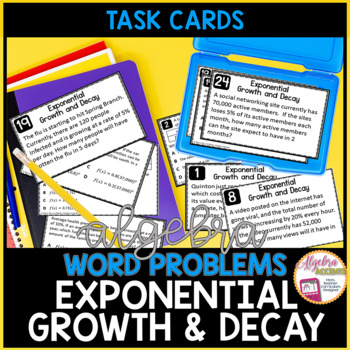
For the activity, another fabulous resource from one of my favorite Teachers-Pay-Teachers go to sellers, Algebra Accents. In this activity she has 48 problems! 24 open ended and 24 multiple choice. Well worth the $3 investment! Since it is a newer TEK in Texas for Algebra 1, finding appropriately leveled problems for our students can be a challenge so I am all about the convenience and would have spent more that $3 of my time creating something.
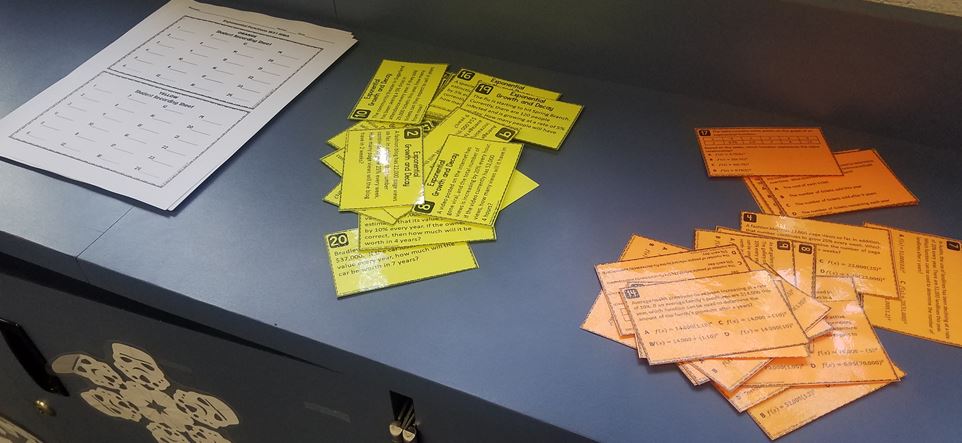
I prepared it by printing one colorful set of the open ended task cards and a different color set of the multiple choice ones. I laminated them and stacked them in the back of the class. Students had an answer sheet for both colors and could work at their own pace. The problems are fantastic!
I'm planning on continuing the cards tomorrow with the following Warm-Up:
The instructions read:
Label each equation and graph as linear, quadratic or
exponential. Then match the graph with
its equation.
One of our TEKS is comparing the different functions and I thought this a nice reminder before our next lesson over graphing. Download it in Word or PDF for FREE! The font I used in word is Harry P available on Dafont.com here for FREE! I know, it's just a title but I have a problem... at least I admit it :-)
Hope you had a great weekend! As always, please fell free to contact me with any questions and feel free to share!
So.... when I do something from an existing idea, I usually go a little overboard. OK, so I usually go A LOT overboard spending extra hours and trips to the copy machine to make it perfectly formatted. This happened last night. The ever inspiring Sarah Carter posts her weekly puzzle table puzzles and I usually spend hours recreating them to post in my room or the hallway. I do not have extra space so all of mine must be displayed vertically.
Last Friday, Mrs. Carter posted this blog entry:
As I'm sitting in my dentists office anxiously awaiting the fixing of my 48 hour old temporary crown, I repeatedly browse Twitter to take my mind off the horrors of a doctor office visit. Then BAMM! @mathequalslove posts her Five Things Friday blog link. I immediately sigh knowing this blog post will likely lead to a late night in the upcoming week while I need to create at least 50 million things from her brilliance! Seriously though, I do not know how I would be any sort of a creative teacher without Mrs. Carter. My undying gratitude to her for being so creative and sharing!
Luckily, Five Things Friday only had 1 thing that was a printable activity I needed!!! Woohoo! My husband and furbabies might get to see me next week. 😊 And then I made the mistake of continuing to scroll.... dang doctor anxiety! And found her Puzzle Table Post below:
Guess Jon and the fur boys can handle a late night or 12 this week?!?! The one that intrigued me was the Double Letter Puzzles shown below.
I'm thinking it stood out because I did not figure it out in my dentist fear soaked brain. And then I saw her statement....
"They keep insisting that it must be an obscure math or science word despite my reminding them daily that it is an everyday word."
Challenge accepted Mrs. Carter's students! I present a series of Double Letter Puzzles with math terms. Please do not post the answers but feel free to email me at camfan54@att.net if you have questions about the solutions. I've created 6 puzzles, all saved in Word and PDF. I am a font junkie so I used one of my faves on the puzzles. You can get the Cheri font here for FREE!
Some might be pretty obvious but I also knew what I was using. I'm all about having kids use math vocabulary.
This might not be perfect or the exact idea/concept of the puzzle designer but I like the idea of math terms and challenging students to think logically. But 10 minutes later.... this happened!
Download all 6 of my puzzles here for FREE. So I again spent a late night creating goodies and running between the printer, my classroom, and the laminator. If I had a nickel for every hour Sarah Carter has cost me.... 💗💗💗😊😊😉😉 Thanks! Lisa
Last week, on Friday, I realized I need one more major grade for this nine weeks.... and only had one week to get in a new unit and major grade! No pressure at all. Our next unit was Exponential functions. Our curriculum for Math Models deviates quite a bit from Algebra 1 on Exponential Functions (which I have only taught twice before....). While we are still going to work on the basics, they have a very finance/social science driven curriculum. Enter: interest rates! I have never taught them, only had students use them in a senior level course I have taught before. So Monday when I entered the school and was in a 'hadn't had my coffee need a major grade quick' phase... one of my colleagues recommended a finance project she had. It seriously covered almost every single TEK (Texas Essential Knowledge and Skills- our state Curriculum Standards) I needed for the entire unit! Project picked, I needed some notes. In discussion, I learned that almost all interest is now compounded continuously as oppose to our standard Simple and Compound that I've always used. I searched for some interactive notebook items but came up blank. I couldn't even find a graphic that explained what exactly the e value in the Pert formula was!
I created this one and am really happy with how it came out. My students just needed a reference for what everything is. I was not wanting super intense notes.
Here is the entire project for FREE if you are interested. This is courtesy my fabulous co-worker, Mrs. Shirly Boots for the original and inspiration. I added a little more detail as I am making it a major grade and needed a clear rubric and wanted to try and add a little more detail for the students.
In the project, they will draw random amounts from me to use. I did a variety of amounts $100-$500 and another from $5,000-$9,000. I've included the amounts in the file as well for you.
As always, these are in both editable and PDF format because of my different font loves!
Follow Up to my activity.... I am definitely going to 'tweak' the project for next year. I'm going to make them choose the 2 investments and apply them to both starting amount for an apples to apples comparison. They will also graph them separately. I'll share that as well when I complete it.
Please let me know if you see any corrections or have anything to add.
I already shared the first part of my quadratics unit and wanted to share the rest! I will also be sharing all the activities we created for Algebra 1 that I do not cover in MMA in a later post, including vertex form, graphing using axis of symmetry, etc. You can see the blog for the first part of quadratics here. It also includes some polynomial stuff as it is combined with quadratics in MMA.
After we completed the attributes and solving by graphing, we completed a project with Ozobots. Read about it in detail here.
Here is a video of the outcome of the project.
After completing the project I realized the need for more practice in graphing. It has been an ongoing lesson in stoicism to have them graph accurately and not just sketch from the calculator!! I used the following worksheet which you may get for FREE here.
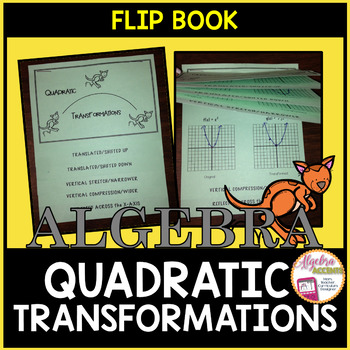
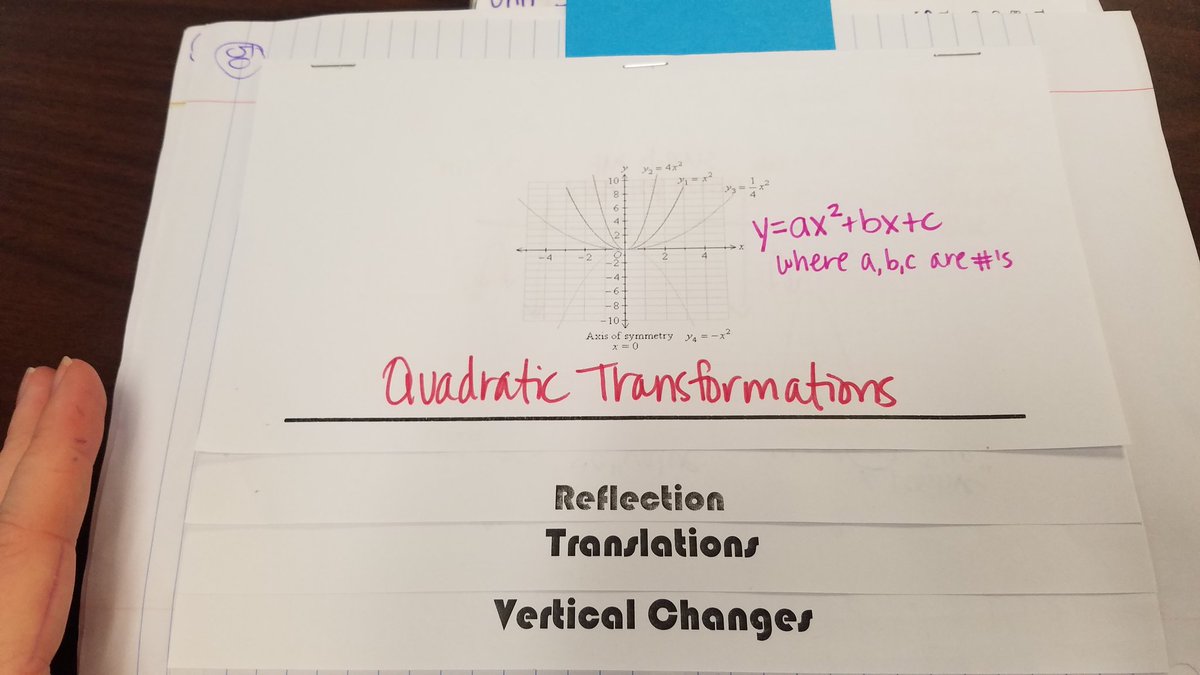
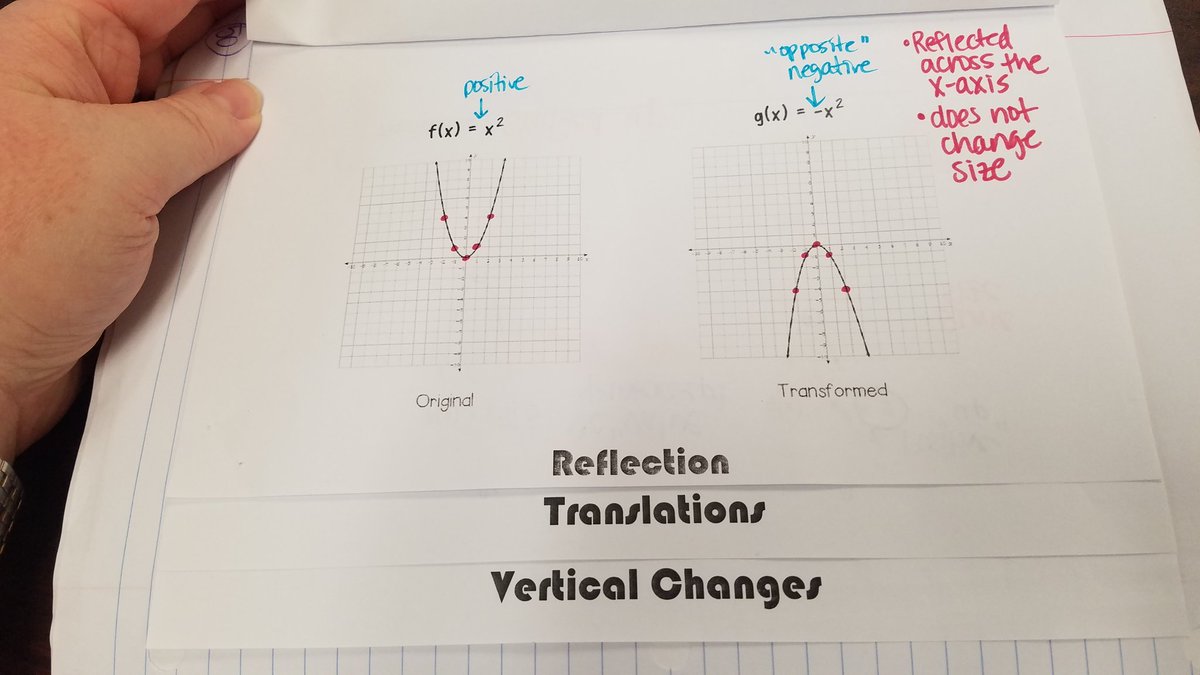
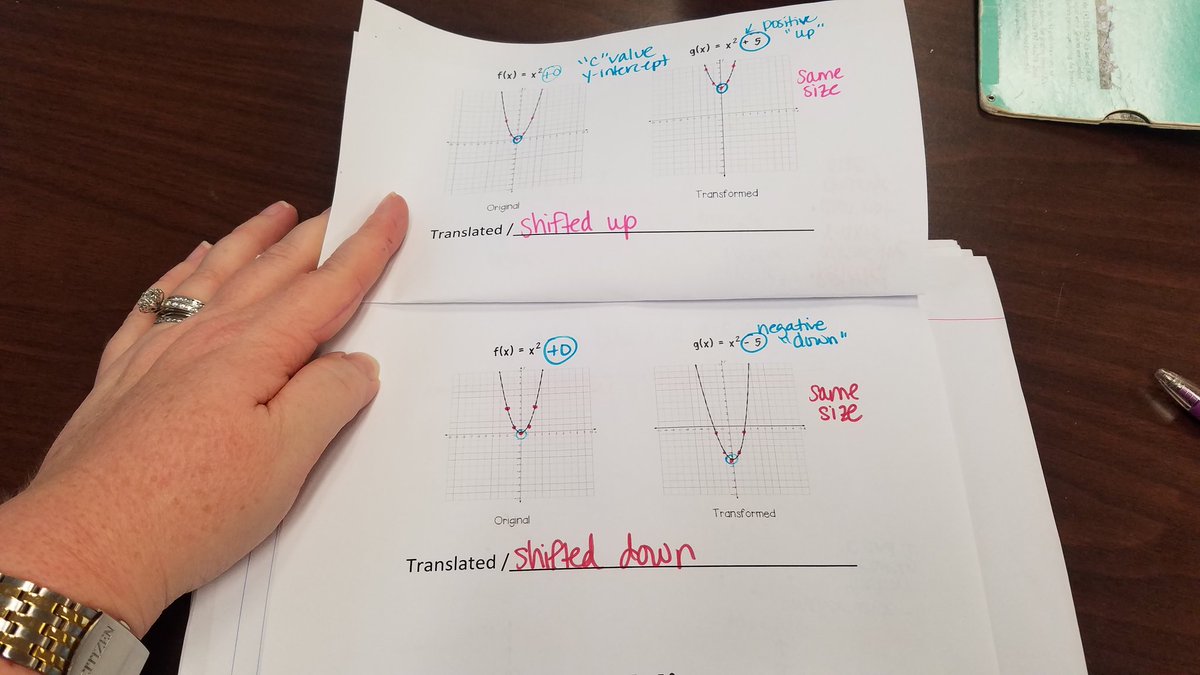
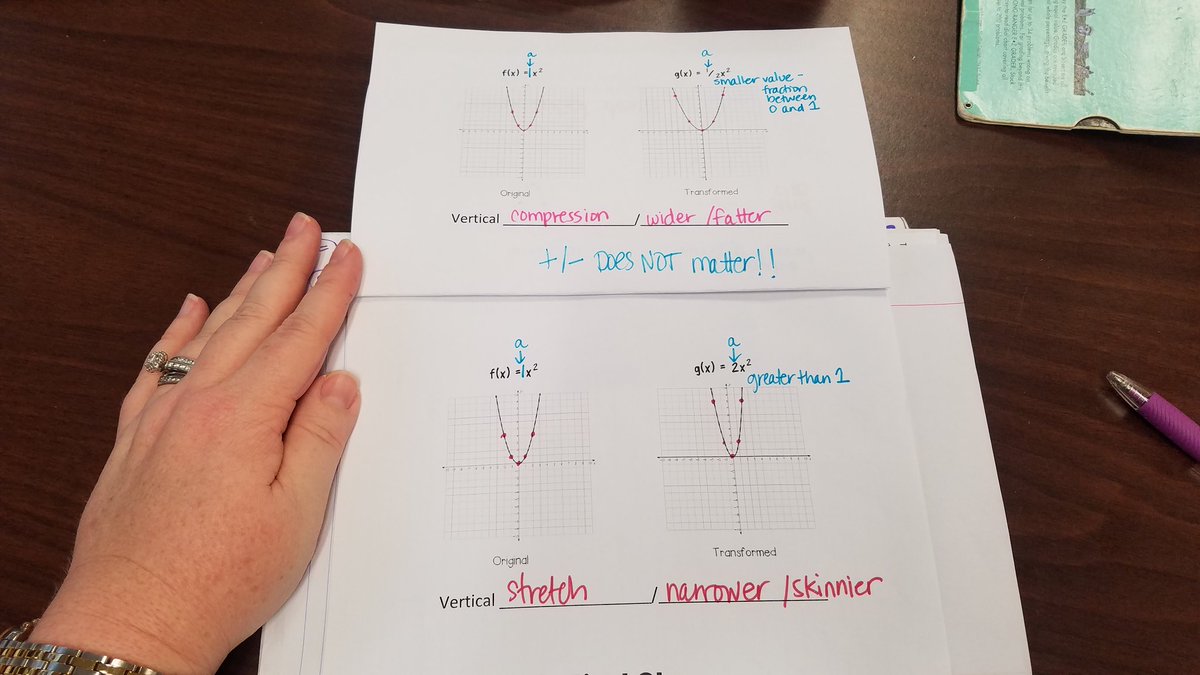
After this we needed to cover a few more concepts. The next we addressed was Quadratic Transformations. I completed a foldable inspired by the Teachers Pay Teachers Activity below.
I would love to see any resources you might have for transformations. This one was done before the TEKS change so the horizontal change will be added before next year. I'll edit them for the future and link them here.
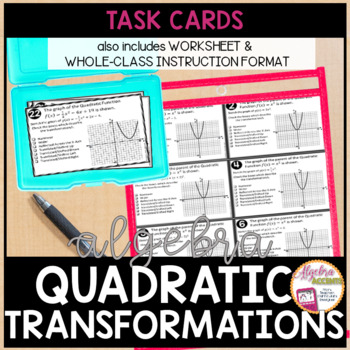
I followed it up with this assignment from Teachers Pay Teachers Algebra Accents. Several years ago, I purchased her curriculum and found it to be worth every penny!
I printed the kids 12 task cards to complete for their practice. This was a great transformations assignment and I highly recommend the $3 investment! It was the perfect activity for transformations!!
Then we went back to good ol' factoring!! Solving by factoring was an algebra concept that often got skipped over a little. We were usually cramming this in right before our standardized test and just did not have a lot of time to work on it. Since my kids already had the factoring part of it earlier, I just needed notes emphasizing the connection to quadratic solutions. Back to the ever dependable and ah-maz-ing Mrs. Sarah Carter at Math=Love to have these available!!
I created my own typed notes as we do a lot of fill in the blank notes to emphasize certain vocab and save writing time. Get the word version here and the PDF here for FREE!
I broke these notes into 2 classes/presentations too. One class we did the top and a=1 examples. Many of my students did not complete their factoring practice assignments so I wanted to make sure they all had time and were working on this concept. After that part of the notes I had created another Clue activity but tailored it to my class and school. They really seemed to get a kick out of it and even high schoolers LOOOOOVVVVVEEEE their name on a worksheet! Get the word version here and the PDF here.
This card template was adapted from this Karen Cookie Jar Post. It is different than the factoring one I previously shared.
Next class, I presented the other 2 examples (a>1) and gave them another hidden picture activity. I made it a little less 'intense' than last time (the factoring one) and even let one of my classes give me picture ideas. The word version uses my new favorite free font, KG Payphone which you can download for FREE here! You may download the Word version here and PDF here for FREE!
I mix my mystery pictures up a bit to where I try not to create a pattern that you can see in the letters!
Then here it comes..... the one... the ultimate... the one way that works for any quadratic.... the QUADRATIC FORMULA!!! I love it, probably because I'm a math nerd but I'm gonna make 'em do it! We sing, we sing a lot during this time! I even have this activity for extra credit where they have to sing it to other teachers or staffers at school. My department head and I once had a sing off heard 'round the school.
Download this here if you'd like to edit for your class. I am of the Pop Goes the Weasel school of melody too, just so you know! There is quite a debate on the versions, which Sarah Carter writes about on her blog here. I also used this post to create my new notes for this year.
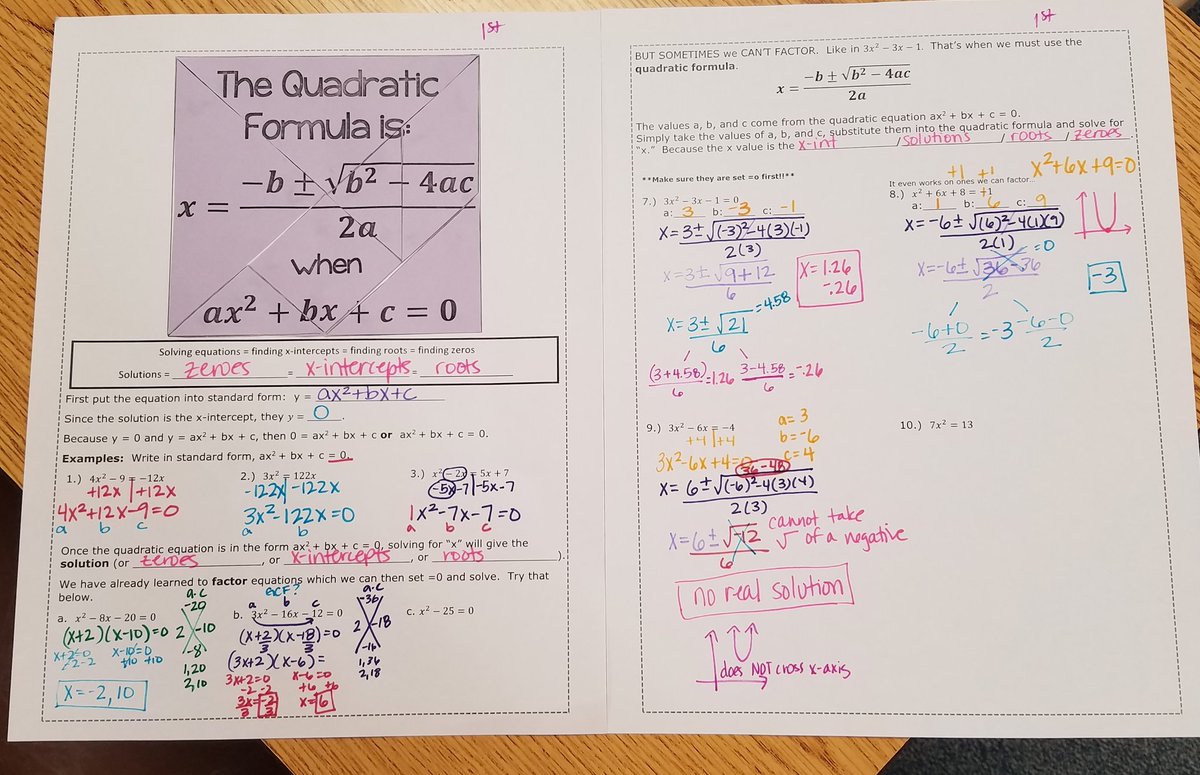
My students have all had Algebra 1 so the Quadratic Formula is nothing new. I wanted to create a little different note set to make it a bit more interactive. Enter, Sarah Carter, and we have a tangram Quadratic formula puzzle for our notes! I'm loving these. Since my students have already had Algebra, and likely the exact same notes, I wanted to change it up a little.
Download these notes here and the tangram (2 per page) here. Get the version for Algebra 1 here. Now for practice we have used this worksheet in the past for Algebra 1.
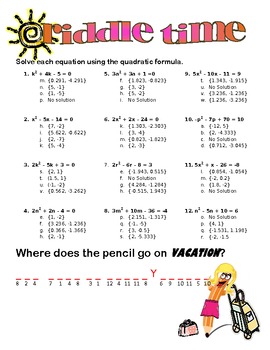
Last year, I wanted to mix it up a little and purchased this riddle activity on Teachers Pay Teachers. I prefer choosing activities that they have instant assessment to check their work. Not all but many of my activities are. I feel for students that work so hard and are doing something wrong the whole time, especially when they are at home working on it and it's something as involved as the quadratic Formula!
For my students this year, I created a Mad Lib Scavenger Hunt type activity. I will be writing about this at length later but you may download the Student WS for the activity here in Word (you will need the Jedi Font found here for FREE) or the PDF here. The accompanying wall sheets in Word here or PDF here! I have previously written about how I create my scavenger hunts here. This is the same idea except they are completing a Mad Lib. These are a combination of methods to solve as well, not just Quadratic Formula (actually there are only 2 you have to use the Formula for but you can edit for whatever you need).
Since these can be more than one method to solve, I created the activity for them to complete to see how both factoring and Quadratic Formula can be used. I know there are other methods but these are the only 2 taught in Math Models.
Download it here for FREE! For any keys, please feel free to email me at camfan54@att.net from your school or professional account. I've had students try and email for keys in the past but luckily their email said student!
Right now this is the rest of my Quadratic Unit! This was a crazy long post but hopefully you found something you can use! Please let me know if you see any mistakes or want to share! I'll add the remaining resources for Algebra 1 in another blog entry. Thanks! Lisa
Previously, I wrote a blog about the impact computer science, specifically, Ozobots had made on my classroom with just a couple of days of using them. You can find that post here. My next challenge was to work them directly into my content. One of the TEKS of Math Models is A.7A which is graphing and identifying the key features of a quadratic. Also in the state of Texas, we have process standards which includes students applying a number of skills from math to life and the real world as well as using problem solving skills and methods. I felt that these could combine well to make an Ozobots Quadratic Project for Math Models or Algebra 1! So, I then went about deciding how to 'Ozobot' Quadratics. I wanted to make them all easily identifiable characteristics that the Ozobot could 'mark' with color coding. **Teacher Tip** We have only done a couple of days of color coding and as the project got started, I realized the students needed to do a bit more Ozobot practice with freehand coding. The previous days we practiced with pre-printed activities and the accuracy was marked for you. While many did play around and go beyond, they still needed to practice their precision with the color coding without a template. As a result, many projects had correction pieces of paper taped on. In the future, I will account and deduct for this. Live and learn is the motto for me every time I try something new! I created this project rubric as I was going to spend several days on it and it would be a major grade.
I have edited it to be a bit more precise after completing the project. I also carefully selected equations that would fit on gridded chart paper and have integer solutions and axis of symmetry.
I had students make their axis fit the equation to utilize as much of the gridded chart paper as possible. Some had differently scaled x and y axis and that really stretched their math comfort zone. Talk about high level application for students so accustomed to one method or practice for completing graphing. The first day, students randomly chose equations (I had them written on Popsicle sticks that each group drew). I had them complete a rough draft on graph paper before providing the chart paper that included their scaling and table. Since then, I have assigned equations to allow for differentiation.
I have taught classes in the past that are project based and as a result, I know the cost of chart paper so do not give students extra!
The first day (50 minute class periods), majority of the groups got the graph on the chart paper ready for coding. A couple started coding... without practicing... and had to re-do. crazy what happens when they do not follow teacher instructions, isn't it?!?!?
On the second day, when they came in, I reminded them to practice coding on scratch paper before trying on their poster. This is a very tedious precision needed skill and requires practice just like anything we want to master. For those of you not familiar with the Ozobots, they require color coding to perform. Here is a student sample...
Ozobot provides a wonderful template for free on their website. You can get it here.
I have all mine laminated with thicker lamination to be durable. On day 2 of the project, groups began coding. Several finished but this is a precision task and time is necessary.
Sometimes the Ozobots can be 'temperamental' so often re-calibrating or getting another one can help. Also, tracing over the lines repeatedly or thick pencil marks can effect coding. If a code did not work that they put on the poster I provided a small piece of white paper to put the correct code on. They would then tape along the edges (after testing it) and apply to the chart paper where it needed to execute. I feel that this would not have occurred as frequently with more freehand coding practice prior to the assignment, as I stated earlier. Live and learn! Here is a picture of a well done correction. In the overall picture it did not really detract form the project.
And here is their completed project in action.
Unfortunately the paper placement in the above video caused Ozobot to fall at the end and they needed to re-shoot the end of the video! I loved their enthusiasm for a correctly finished project.
Day 3 was completing, troubleshooting, filming and grading. I used what seemed to be the most accurate at reading code Ozobot. There were a few times that a too broad line before the vertex would have read the day before but not grading day so I would allow for re-runs of the Ozobot or me going nuts trying to figure out why. It is really about the precision with which the lines were drawn and will be a continual learning process. Here is an excellent finished graph with explanations along the way!
I had some excellent projects and my enthusiasm was heard by everyone! All my poor twitter, Instagram and Facebook followers were bombarded with my excitement and exaltation for days! If you are interested in seeing additional pictures and videos, check out my twitter @CBHSRichMath. I will admit that since this was my first time giving the project, I graded a little leniently but plan on being more strict in the future with adjustments. I will definitely allow for more time to practicing coding freehand. I already made a revised project outline and rubric with more specific directives. I will plan 3 days instead of 2. I will have them practice graphing quadratics once more before the project (we had only done one day prior to the project).
Since I saw certain quadratic graphing issues after the project, I followed up with this worksheet on graphing.
The solutions are not exact but I wanted them to practice the actual graphing and finding the vertex or 'Oreo' in the calculator. This is also why I did not provide tables. I also frequently have students just 'sketch' what they see on the calculator screen.... regardless of what they have been taught or verbally reminded of. I cannot say enough about how computer science has changed my outlook on teaching math. How critical it is to math and the real life lessons they learned when doing it. I was asked how this relates to the math class and as I have said before, there is no more important fundamental than the order of operations. The interviewer (ok, so it was the school newspaper but that sounded fancy!) then asked how this will benefit them in the real world. We all need to complete steps in order to accomplish tasks. We all need to be able to troubleshoot jobs and tasks in order to complete them. We all need to be accurate and precise to do things correctly. I feel Ozobots in the math classroom help with all these. I am so excited I was able to work this important life skill into math concepts and reinforce both. Thank you and if you see any mistakes or have anything to share, please do! Lisa